

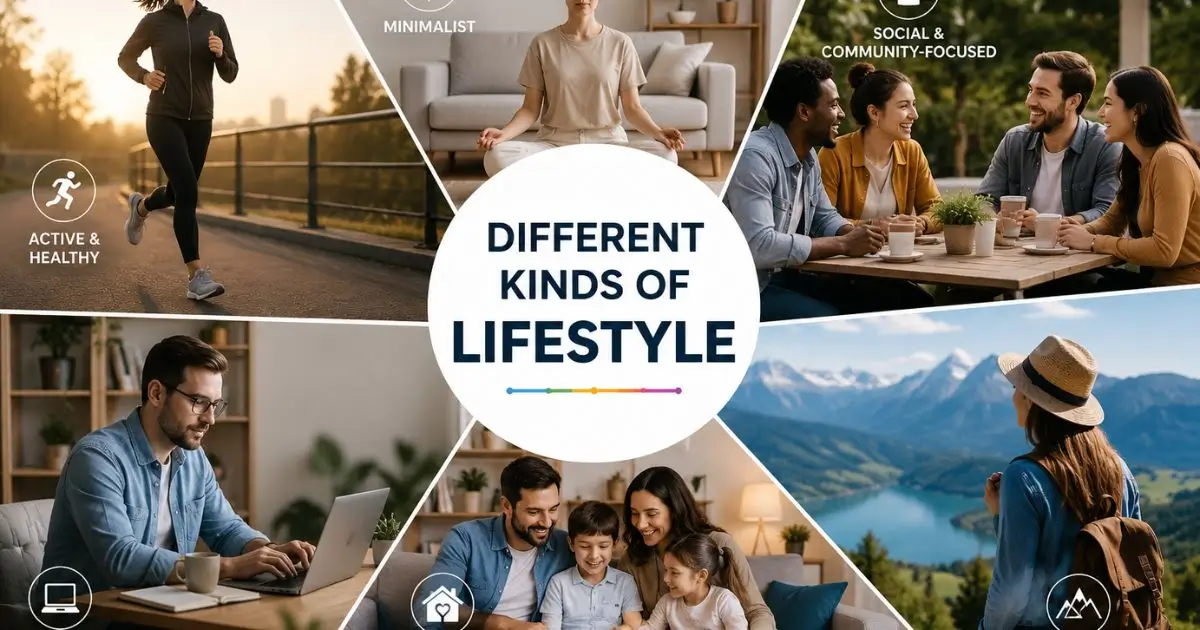
Different Kinds of Lifestyle: A Complete Guide to How People Choose to Live
Most people go through life without ever stopping to ask a simple question: Why do I live the way I do?
Your daily habits, what you eat, how you spend your free time, where you live, and how you manage your health — all of these things add up to something called your lifestyle. And here’s what most people don’t realize: lifestyle isn’t just one fixed thing. There are many different kinds of lifestyle, and each one reflects a set of values, priorities, and choices.
Understanding these different types isn’t about judging how others live. It’s about knowing your options, making conscious choices, and building a life that actually works for you.
In this guide, you’ll learn what lifestyle really means, what the main types are, what drives people toward each one, and how you can think about your own.
A lifestyle is the overall way a person or group of people lives. It includes daily habits, values, social behaviors, health choices, work patterns, and how someone spends their time and money. In short, it’s the combination of choices — big and small — that shape everyday life.
Quick Summary
There are many different kinds of lifestyle — from active and healthy to minimalist, social, digital, and more. Each type is shaped by personal values, culture, and circumstances. This guide explains each one clearly so you can make more intentional choices about your own life.
Why Your Lifestyle Matters More Than You Think
Your lifestyle affects almost everything — your physical health, your mental well-being, your relationships, your finances, and even how long you live.
Research from the Centers for Disease Control and Prevention (CDC) consistently shows that lifestyle factors like diet, exercise, sleep, and stress management are among the biggest contributors to chronic diseases in the United States. In other words, the way you live every day has real consequences.
But lifestyle isn’t just about health. It’s also about identity. The choices you make — where you live, how you work, what you value — say a lot about who you are and what matters to you.
That’s why understanding the different kinds of lifestyle is genuinely useful. It helps you see that there’s no single “right” way to live, but there are better and worse fits depending on your goals.
The Main Different Kinds of Lifestyle
Let’s break down the most common lifestyle types. These aren’t rigid boxes — most people blend elements of several types. But understanding each one clearly is a good starting point.
1. The Active and Healthy Lifestyle
This is one of the most widely recognized ways of living. People who follow an active lifestyle prioritize physical movement, nutritious food, quality sleep, and regular health check-ups.
They might run in the mornings, meal prep on Sundays, avoid processed food, and track their steps. Think of someone like a 32-year-old teacher in Denver who wakes up at 6 AM, goes for a 30-minute jog, eats a balanced breakfast, and skips the late-night scrolling to get to bed by 10 PM.
This lifestyle takes effort and consistency, but the payoff is clear — better energy, lower disease risk, improved mood, and longer life expectancy.
Key traits: Regular exercise, balanced diet, adequate sleep, low alcohol consumption, proactive health management.
2. The Minimalist Lifestyle
Minimalism is about intentionally owning and doing less. People who live this way focus on removing clutter — physical, mental, and digital — so they can concentrate on what truly matters to them.
A minimalist might live in a small apartment with carefully chosen furniture, own only what they use regularly, and spend their money on experiences rather than things. They tend to feel less financial pressure because they buy less.
This lifestyle gained major popularity in the US over the past decade, partly thanks to writers and creators like Joshua Fields Millburn and Ryan Nicodemus, known as The Minimalists.
Key traits: Intentional consumption, decluttered living space, focus on experiences over possessions, financial simplicity.
3. The Social and Community-Oriented Lifestyle
Some people build their entire life around relationships — family, friends, community, and social engagement. Their calendar is filled with gatherings, events, volunteer work, and group activities.
This lifestyle is common in tight-knit communities across the American South and Midwest, where church groups, neighborhood events, and family dinners are central to daily life.
Research consistently shows that strong social connections reduce the risk of depression, anxiety, and even premature death. For people who thrive on connection, this kind of living feels natural and energizing.
Key traits: Strong family ties, active social calendar, community involvement, prioritizing relationships.
4. The Digital and Remote Lifestyle
Technology has made it possible for millions of people to work, socialize, shop, and entertain themselves almost entirely online. The digital lifestyle — especially combined with remote work — has become increasingly common since 2020.
A person living this lifestyle might work from home or a coffee shop, communicate mostly through apps and video calls, and use digital tools to manage finances, fitness, and social life.
This can be incredibly freeing. But it also comes with challenges: isolation, screen fatigue, and blurred work-life boundaries are real problems for many people living this way.
Key traits: Remote or online work, heavy reliance on technology, flexible schedule, location independence.
5. The Nomadic or Travel-Focused Lifestyle
Some people prioritize movement and new experiences above stability. Digital nomads, full-time travelers, and van-lifers fall into this category.
They may work freelance or run online businesses, travel between cities or countries, and define “home” loosely. In the US, the van life movement has exploded, with thousands of people converting vans into mobile homes and documenting their journeys online.
This lifestyle offers rich experiences and freedom, but it requires solid financial planning, flexibility, and comfort with uncertainty.
Key traits: Frequent travel, flexible work, minimal permanent possessions, openness to change.
6. The Sustainable and Eco-Conscious Lifestyle
This lifestyle is driven by a commitment to reducing environmental impact. People who live sustainably make choices around energy use, food sourcing, waste reduction, and transportation that reflect their concern for the planet.
They might eat plant-based or locally sourced food, use public transportation or electric vehicles, compost kitchen waste, and avoid fast fashion. Cities like Portland, Oregon, and Boulder, Colorado, have large communities built around this kind of living.
Key traits: Plant-based or reduced-meat diet, low-waste habits, conscious consumption, environmental activism.
7. The Traditional and Family-Centered Lifestyle
This lifestyle centers on long-standing cultural or religious values — marriage, family, faith, and community responsibility. People who live this way often follow a structured daily routine shaped by tradition.
This doesn’t mean they’re behind the times. It means they find meaning and stability in established roles, values, and practices. For millions of Americans, this lifestyle provides a sense of purpose and belonging that more individualistic ways of living simply don’t offer.
Key traits: Family-first mindset, religious or cultural practice, stable routines, strong sense of community duty.
8. The Wellness and Mindfulness Lifestyle
This goes beyond just eating well or exercising. People who follow a wellness lifestyle invest deeply in their mental, emotional, and spiritual health. They might practice yoga or meditation, journal regularly, see a therapist, use breathing techniques, and be intentional about what they consume — media included.
This lifestyle has grown rapidly in the US, with the wellness industry now worth over $1.8 trillion globally according to McKinsey & Company.
Key traits: Meditation or mindfulness practice, therapy or coaching, intentional rest, holistic health approach.
A Quick Comparison of Lifestyle Types
| Lifestyle Type | Core Focus | Common Challenge |
|---|---|---|
| Active & Healthy | Physical fitness and nutrition | Consistency and time |
| Minimalist | Simplicity and intentional living | Social pressure to consume |
| Social & Community | Relationships and belonging | Overcommitment and burnout |
| Digital & Remote | Technology and flexibility | Isolation and screen fatigue |
| Nomadic & Travel | Exploration and freedom | Financial instability |
| Sustainable & Eco | Environment and ethics | Higher upfront costs |
| Traditional & Family | Values and stability | Resistance to change |
| Wellness & Mindfulness | Mental and emotional health | Commercialization of wellness |
How to Figure Out Your Own Lifestyle Type
Most people don’t fit neatly into one category. A healthy lifestyle person might also be deeply social. A minimalist might also be eco-conscious. That’s completely normal.
The most useful question to ask yourself isn’t “What lifestyle type am I?” but rather: “Are my daily habits actually aligned with what I value?”
If you value health but sit for 12 hours a day and eat fast food three times a week, there’s a gap. If you say you value family but spend most of your free time working, there’s a disconnect.
Identifying the different kinds of lifestyle that exist is step one. Step two is honest reflection about where you are versus where you want to be.
Bilkul bro, short version ye hai:
(Frequently Asked Questions): Different Kinds of Lifestyle
What are the common lifestyle types?
Common types include active, minimalist, social, digital, and family-centered lifestyles. Many people combine different types based on their needs and values.
Can lifestyle change over time?
Yes. Age, work, family, location, and personal priorities can all change a person’s lifestyle.
Is one lifestyle better than another?
No. The best lifestyle is one that fits your values, supports your health, and is sustainable.
How does lifestyle affect health?
Diet, exercise, sleep, stress, and social connections can strongly influence overall health and disease risk.
What is a balanced lifestyle?
A balanced lifestyle includes physical activity, rest, social connections, work, and personal time without overemphasizing one area.