

How AI Is Changing Business in 2025: A Practical Guide
Every week, another company announces a new AI tool. Chatbots handle customer questions overnight. Algorithms predict what shoppers will buy next. Robots sort packages in massive warehouses. If you run a business or work inside one, you’ve probably wondered how artificial intelligence is changing business around you — and whether you’re already falling behind.
The truth is, AI is no longer a futuristic experiment. It’s here right now, reshaping how companies sell, hire, plan, and serve customers. Understanding how artificial intelligence is changing business isn’t optional anymore. It’s a practical survival skill in a competitive market.
In this guide, you’ll learn exactly where AI is making the biggest impact, see real examples from companies you already know, and get simple ideas you can act on — whether you lead a team of 500 or run a small online shop from your kitchen table.
Artificial intelligence in business means using smart software and machines to handle tasks that normally require human thinking. This includes recognizing patterns, making predictions, answering customer questions, and automating repetitive daily work. When people explore how artificial intelligence is changing business, they want to understand how these tools replace slow, manual processes with faster, smarter systems
Conclusion
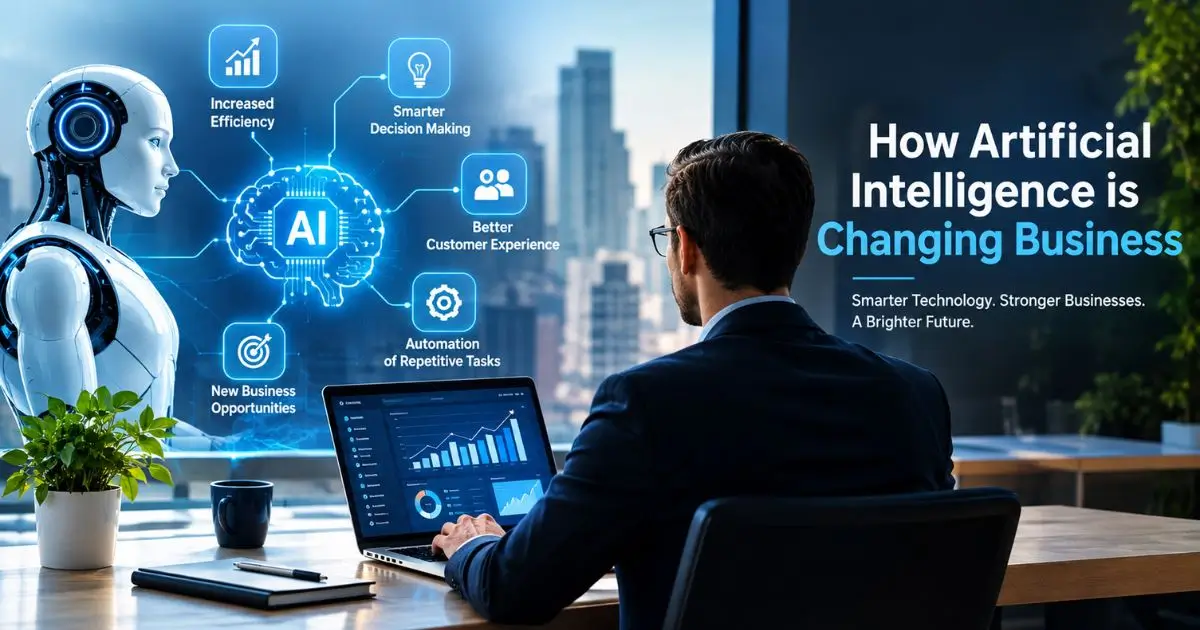
AI is transforming customer service, marketing, hiring, and daily operations across every industry. Companies that adopt AI tools early save time, cut costs, and make better decisions. You don’t need a big tech team to start — many AI solutions are affordable and easy to set up this year.
Customer Service Gets a Major Upgrade
Think about the last time you contacted a company for help. Chances are, a chatbot answered your first question before a human ever got involved. That’s one of the clearest signs of how artificial intelligence is changing business today.
AI-powered chatbots can handle thousands of conversations at the same time. They work around the clock, never call in sick, and respond in seconds instead of minutes. Bank of America uses its AI assistant “Erica” to help millions of customers check balances, pay bills, and track spending — all through simple text messages inside their app.
This doesn’t mean human support is disappearing. Instead, AI handles the easy, repetitive questions so your team can focus on complex problems that genuinely need a human touch. The result is faster service for customers and less burnout for your staff.
Marketing That Actually Feels Personal
Old-school marketing meant sending the same email blast to everyone and hoping a small percentage clicked. AI changed that game completely.
Now, AI tools analyze what each customer browses, buys, and ignores. Then they automatically create personalized emails, product suggestions, and ads tailored to every single person. Netflix does this with movie recommendations. Amazon does it with product suggestions. Small e-commerce stores can do it too using tools like Klaviyo or Mailchimp’s built-in AI features.
This level of personalization wasn’t possible five years ago without a massive budget and a data science team. Today, even a solo online seller can use AI to send the right message to the right person at the right time. That’s a huge shift in how artificial intelligence is changing business marketing strategies for companies of all sizes.
Smarter Decisions, Less Guessing
One of the biggest advantages of AI in business is better decision-making. Instead of relying on gut feelings or outdated spreadsheets, companies now use predictive analytics to see what’s likely to happen next.
For example, a retail chain can use AI to predict which products will sell out next month based on weather patterns, local events, and past sales data. Walmart uses machine learning models to manage inventory across thousands of stores, reducing waste and keeping shelves stocked with what customers will need next.
This kind of AI integration helps leaders make confident choices backed by real data. You spend less time debating opinions in meetings and more time acting on clear, measurable insights.
Operations and Supply Chains Run Smoother
Behind the scenes, AI is quietly fixing some of the messiest parts of running a business. This is a perfect example of how artificial intelligence is changing business logistics from the ground up.
Supply chain management used to involve endless phone calls, manual tracking, and constant surprises. Now, AI systems monitor shipments in real time, predict delays before they happen, and automatically reroute deliveries when problems arise.
UPS uses an AI-powered routing system called ORION that saves the company around 100 million miles of driving every single year. That translates to massive fuel savings and faster deliveries for customers. You don’t need to be UPS to benefit — many logistics platforms now include AI features that small and mid-size businesses can use right out of the box.
Business automation powered by AI also handles things like invoice processing, quality checks on factory lines, and equipment maintenance alerts. These aren’t flashy changes, but they save serious money over time.
Hiring and HR Get a Helping Hand
Recruiting is slow, expensive, and often biased — even when people genuinely try to be fair. AI is stepping in to help fix that.
AI screening tools can review thousands of resumes in minutes, flagging the most qualified candidates based on skills and experience rather than names, schools, or backgrounds. Companies like Unilever use AI-driven video interviews and game-based assessments to evaluate early-stage applicants, cutting their average hiring time by several months.
Of course, AI in hiring isn’t perfect. If the training data contains bias, the AI can repeat and even amplify it. Smart companies use AI as a first filter, then bring in human judgment for final decisions. The key is using intelligent automation to speed things up without losing the human element that matters most.
What This Means for Small Businesses
A common myth is that AI is only for giant corporations with huge budgets and tech departments. That’s simply not true anymore.
Small businesses can use AI tools for customer support (Intercom, Zendesk AI), content creation (Jasper, ChatGPT), bookkeeping (QuickBooks AI features), and social media scheduling (Buffer’s AI assistant). Many of these tools cost less than $50 per month.
The real question isn’t whether you can afford AI. It’s whether you can afford to ignore how artificial intelligence is changing business in your specific industry while your competitors move ahead.
Starting small — even with one AI chatbot on your website or an AI email tool — can give you a real edge without a big investment.
AI Impact Across Key Business Functions
| Business Area | Before AI | After AI |
|---|---|---|
| Customer Support | Long wait times, limited hours | Instant replies, 24/7 availability |
| Marketing | Generic mass emails | Personalized messages per customer |
| Inventory | Manual counting, frequent stockouts | Predictive restocking, less waste |
| Hiring | Weeks of resume screening | Minutes of AI-powered filtering |
| Data Analysis | Slow spreadsheets, human error | Real-time dashboards, smart alerts |
This comparison shows why the AI transformation wave is touching every department, not just IT.
Challenges You Should Know About
It would be dishonest to say AI is all upside with zero problems. There are real challenges, and as you think about how artificial intelligence is changing business in your company, you should keep these hurdles in mind.
Data privacy is a big one. AI systems need large amounts of data to work well, and collecting that data responsibly matters. In the US, regulations around AI and consumer data are still evolving, so businesses need to stay informed and careful about what they collect and store.
Cost is another factor. While many AI tools are affordable, building custom AI solutions from scratch can get expensive fast. Start with off-the-shelf tools before investing in anything custom-built.
Employee concerns are real too. Your team may worry about losing their jobs to AI. The best approach is transparency. Show them how AI handles boring, repetitive tasks so they can focus on more meaningful, creative work. AI adoption works best when people feel included in the process, not replaced by it.
What’s Coming Next
The pace of AI development is accelerating rapidly. In the next two to three years, expect to see even deeper AI integration in areas like product design, legal research, healthcare diagnostics, and financial planning.
Generative AI — the technology behind tools like ChatGPT and Midjourney — is already helping businesses create marketing copy, product images, and training materials in minutes instead of days. This trend will only grow stronger and more accessible.
Understanding how artificial intelligence is changing business isn’t a one-time project you complete and forget. It’s an ongoing process. The companies that stay curious, test new tools regularly, and adapt quickly will be the ones that thrive in the years ahead.
Frequently Asked Questions
How is AI changing small businesses?
AI automates repetitive tasks, saves time, and helps small businesses reduce costs.
What industries are most affected by AI?
Healthcare, finance, retail, and manufacturing are rapidly adopting AI.
Will AI replace human workers?
AI will automate some tasks, while humans continue focusing on creativity, strategy, and relationships.
How can a business start using AI?
Start with one business problem and choose an affordable AI tool to solve it.
Is AI safe for customer data?
AI can be safe when businesses use trusted tools and follow proper data privacy and security practices.