

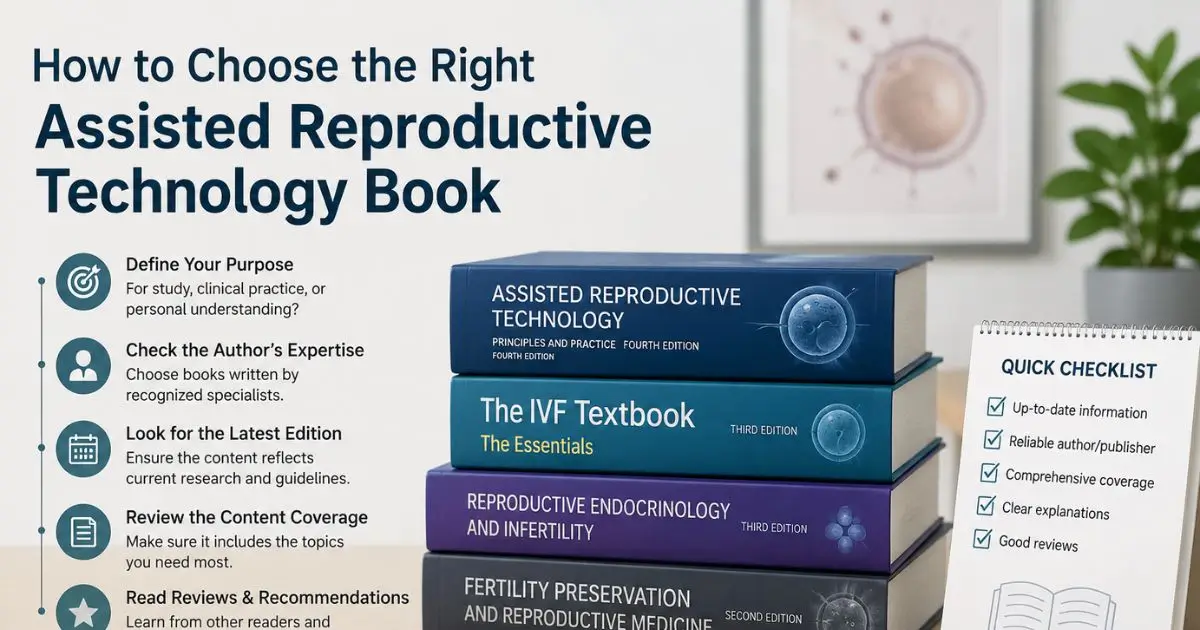
How to Choose the Right Assisted Reproductive Technology Book (2025 Guide)
Finding reliable information about fertility treatments can feel overwhelming. You type a question into a search engine and get thousands of results — blog posts, forum threads, clinic ads — but very few of them go deep enough to actually teach you something useful.
That is where a good assisted reproductive technology book comes in. A well-written book gives you structured, fact-checked knowledge that a quick web search simply cannot match. Whether you are a medical student cracking open your first reproductive endocrinology textbook, a fertility specialist looking for an updated reference, or a patient trying to understand IVF before your first consultation, the right resource makes a real difference.
Assisted reproductive technology (ART) refers to any fertility treatment where eggs or embryos are handled outside the body. The most common example is in vitro fertilization (IVF), but the field also includes procedures like intracytoplasmic sperm injection (ICSI), egg freezing, and embryo genetic testing. An ART reference book covers the science, clinical protocols, lab techniques, and patient care involved in these procedures.
Quick Summary
- Students and residents should start with a comprehensive reproductive medicine textbook that covers both theory and lab protocols.
- Practicing clinicians benefit most from updated editions that reflect the latest ASRM and ESHRE guidelines.
- Patients and intended parents need plain-language fertility guides — not dense medical references.
- Always check the publication year. Fertility science moves fast, and a book from 2012 will miss critical advances like preimplantation genetic testing improvements.
Why the Right Book Matters More Than You Think
Fertility medicine changes quickly. Ten years ago, time-lapse embryo imaging was still experimental. Today, many top US clinics use it as a standard part of their IVF lab workflow. A book published in 2015 might not even mention AI-driven embryo selection, which is now one of the hottest topics in the field.
If you are studying for boards or preparing for a fellowship in reproductive endocrinology and infertility (REI), outdated material can actively hurt you. You could spend weeks memorizing protocols that have already been replaced by safer, more effective approaches.
For patients, the stakes are different but equally real. Reading an outdated or overly technical book can create unnecessary anxiety. I have seen patients walk into consultations terrified of risks that modern protocols have largely eliminated — simply because the book they read was fifteen years old.
The goal is to match the resource to your actual situation. Let me walk you through the best options by category.
Best Picks for Medical Students and Residents
If you are in medical school or starting an OB/GYN residency, you need a book that builds a strong foundation without drowning you in niche lab details you will not use yet.
“Textbook of Assisted Reproductive Techniques” (Gardner, Weissman, Howles, Shoham) is widely considered the gold standard in this space. It covers everything from ovarian stimulation protocols to cryopreservation methods and is detailed enough to serve as a long-term reference throughout your training. The latest edition includes updated chapters on fertility preservation for cancer patients, which is a rapidly growing subspecialty.
Pros: Extremely thorough. Written by globally recognized experts. Covers both clinical and laboratory sides of ART.
Cons: It is dense. At over 900 pages, it is not a casual read. The price tag is steep — often above $200 for the hardcover — which is typical for medical textbooks but still a real barrier for students.
Practical tip: Many university libraries carry digital access through platforms like ClinicalKey or Ovid. Check before you buy.
A lighter alternative is “The IVF Textbook: The Essentials” by David K. Walmer and colleagues. It is shorter, more focused, and written in a style that is easier to absorb during a busy rotation. It will not replace Gardner for depth, but it is an excellent starting point.
Best Picks for Practicing Clinicians and Lab Scientists
If you already work in a fertility clinic, your needs shift. You do not need basics — you need updates, troubleshooting guidance, and evidence-based protocol comparisons.
“Assisted Reproduction Techniques: Challenges and Management Options” (Kovacs, Brinsden, DeCherney) is a strong choice here. It focuses heavily on clinical decision-making and complication management, which is exactly what experienced practitioners need. The chapters on ovarian hyperstimulation syndrome (OHSS) prevention and recurrent implantation failure are particularly well-regarded.
For embryologists and lab directors, “Human Embryology and Assisted Reproduction” (Menezo and Veiga) offers detailed coverage of embryo culture systems, vitrification techniques, and quality control standards. This is not a book you read cover to cover — it is a bench reference you keep in the lab and consult when you need to troubleshoot a specific protocol.
Real example: A clinic in Dallas recently switched its vitrification protocol after the lead embryologist read a comparative analysis in the latest edition of a leading ART reference book. The change improved post-thaw survival rates by roughly 8 percent over six months. That is the kind of practical impact a good resource can have.
Best Picks for Patients and Intended Parents
If you are going through fertility treatment or considering it, you do not need a medical textbook. You need clear, compassionate writing that explains what to expect without overwhelming you with jargon.
“The Fertility Book: Your Complete Guide to Achieving a Healthy Pregnancy” by Kim Clugston is one of the most patient-friendly options available. It walks you through the emotional and medical sides of treatment in plain English. It covers IUI, IVF, donor eggs, surrogacy, and male factor infertility with equal attention.
Another strong choice is “It Starts with the Egg” by Rebecca Fett. While it is not strictly an assisted reproductive technology book, it is one of the most popular fertility guides for patients in the US. It focuses on evidence-based lifestyle and supplement strategies that may improve egg quality before and during treatment. Many REI doctors in the US actually recommend it to patients during their first consultation.
Honest note: No patient-facing book can replace a conversation with your own doctor. Every fertility case is unique, and general advice — no matter how well-researched — may not apply to your specific diagnosis. Use these books to prepare better questions for your appointments, not to self-diagnose or self-treat.
How to Evaluate Any Fertility Book Before You Buy
Before you spend money on any reproductive medicine resource, run it through this quick checklist:
| Check | What to Look For |
|---|---|
| Publication date | Within the last 3–5 years is ideal. Anything older than 7 years is likely outdated on key topics. |
| Author credentials | Look for board-certified REI specialists, PhD embryologists, or recognized researchers. |
| Edition number | Higher editions usually mean the content has been updated. First editions can be risky. |
| Publisher | Academic publishers (Elsevier, Springer, Cambridge) tend to have stronger peer review than self-published titles. |
| Reviews from your peer group | A book loved by patients may frustrate a clinician, and vice versa. Match reviews to your audience. |
Conclusion
Choosing the right resource comes down to knowing where you are in your journey and what you actually need from the material. A first-year resident and a patient preparing for their first IVF cycle have very different requirements, and no single book serves both audiences well.
Start by identifying your category — student, clinician, or patient — and then pick the most current edition from a reputable publisher. Read the table of contents before you commit. If the chapters align with the specific topics you care about, you have probably found a good match.
The field of reproductive medicine is advancing faster than ever. New techniques like in vitro gametogenesis and uterine transplant protocols are moving from research labs toward clinical reality. Staying informed through high-quality reading is one of the simplest and most effective ways to keep up.
Frequently Asked Questions
What is the best ART book for beginners?
The IVF Textbook: The Essentials is good for clinicians, while The Fertility Book is more accessible for patients.
How often are ART textbooks updated?
Most are updated every 4–6 years, with some offering online updates.
Can a fertility book replace a specialist?
No. Books provide useful information but cannot replace personalized medical advice.
Are there free ART resources?
Yes. Organizations like ASRM offer free patient guides and clinical resources online.
Do I need the latest edition?
For clinical or academic use, yes. For general knowledge, an older edition may still be useful.