

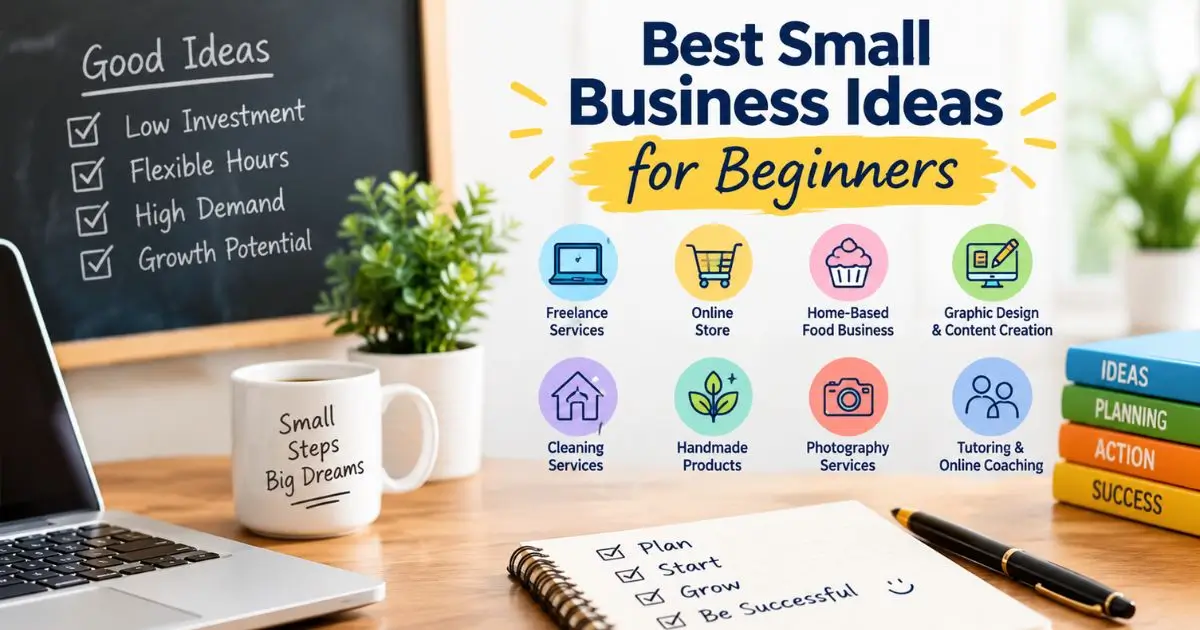
Best Small Business Ideas for Beginners in 2025
Starting a business feels exciting — until you sit down and realize you have no idea where to begin. You scroll through hundreds of lists online, and almost every one tells you to “follow your passion” without explaining how to actually make money doing it.
If you are searching for the best small business ideas for beginners, you are not alone. Millions of people across the US want to start something of their own but feel stuck because they lack experience, a big budget, or both. The good news is that you do not need any of those things to get started.
This guide cuts through the noise. You will find practical, low-cost business ideas organized by type, honest pros and cons, real examples, and a simple framework to help you pick the right one for your actual situation — not some idealized version of it.
What is a beginner-friendly small business?
A beginner-friendly small business is a venture that requires little to no prior industry experience, has low startup costs (typically under $1,000), and can generate income within the first few months. These businesses rely on skills you already have or can learn quickly, making them the best small business ideas for beginners who want to start earning without taking on major financial risk
Quick Summary.
The most realistic first businesses fall into three buckets — service-based (like cleaning or tutoring), digital (like freelancing or social media management), and local hands-on (like pet sitting or mobile car detailing). The best small business ideas for beginners are the ones that match your current skills, budget, and schedule. Pick one, start small, learn fast, and improve as you go.
Service-Based Businesses You Can Start This Week
Service businesses are the easiest entry point for new entrepreneurs. You trade your time and effort for money, which means you do not need inventory, a storefront, or expensive equipment. When people ask for the best small business ideas for beginners with the fastest path to income, service-based models almost always top the list.
1. Residential Cleaning
Startup cost is low — basic supplies run about $50 to $150. You can start with friends and neighbors and grow through word of mouth. A real example: many cleaning businesses in suburban areas like Austin, Texas, started with one person and a vacuum and now employ small teams within two years.
- Pros: Steady demand, repeat customers, easy to learn
- Cons: Physically tiring, hard to scale without hiring help
2. Tutoring or Test Prep
If you are strong in math, English, or science, parents will happily pay $25 to $60 per hour for one-on-one help. You can tutor in person or over Zoom, which keeps your costs near zero.
- Pros: High hourly rate, flexible schedule, rewarding work
- Cons: Income is tied directly to your available hours
3. Handyman Services
Basic home repairs — fixing leaky faucets, mounting TVs, patching drywall — are always in demand. If you are already handy around the house, this is one of the most practical startup ideas you can launch with a basic toolkit and a few hours of free time.
- Pros: High demand, good pay per job, easy referrals
- Cons: Requires some existing skill, potential liability concerns
Digital and Online Business Ideas
If you want to work from home and avoid dealing with physical customers, online businesses are a strong option. These take a bit longer to build momentum but offer more long-term flexibility. Many lists of the best small business ideas for beginners now include at least a few digital options because the barrier to entry has never been lower.
4. Freelance Writing or Virtual Assistance
Platforms like Upwork and Fiverr make it easy to land your first clients. Many new business owners start here because the barrier to entry is almost zero. You just need a laptop and reliable internet.
- Pros: No startup cost, work from anywhere, flexible hours
- Cons: Competitive market, income can be inconsistent at first
5. Social Media Management for Local Businesses
Most small shops and restaurants know they need Instagram and Facebook but have no time to post. If you understand social media, you can charge $300 to $800 per month per client to handle their content and engagement.
- Pros: Recurring monthly income, growing demand
- Cons: Requires staying current with platform algorithm changes
6. Print-on-Demand Store
You design graphics for t-shirts, mugs, or phone cases, and a third-party company prints and ships them. You never hold inventory. It is a popular home-based business model, though margins are thin until you build a recognizable brand.
- Pros: No inventory risk, creative outlet, passive potential
- Cons: Low margins, heavy competition, slow early growth
Local and Hands-On Business Ideas
These businesses require you to show up in person, but they often face less online competition and build loyal local customer bases quickly. For people who prefer active, outdoor, or hands-on work, these are often the best small business ideas for beginners to consider.
7. Pet Sitting and Dog Walking
The pet care industry in the US is worth over $130 billion, and it keeps growing every year. Apps like Rover make it easy to find clients, but you can also build your own client list through neighborhood flyers and local Facebook groups.
- Pros: Fun work, low startup cost, flexible schedule
- Cons: Income varies by season, requires physical presence
8. Mobile Car Detailing
Instead of opening a car wash, you go to the customer. A basic detailing kit costs around $200 to $400, and you can charge $80 to $200 per vehicle. This is one of the more profitable low-cost businesses if you live in an area with lots of car owners.
- Pros: High per-job revenue, low overhead, strong referrals
- Cons: Weather dependent, physically demanding
9. Lawn Care and Landscaping
A used mower and a trimmer are all you need to start. Lawn care is one of the most reliable easy business to start options in suburban and rural areas because grass keeps growing whether the economy is good or bad.
- Pros: Recurring weekly clients, simple to learn, steady demand
- Cons: Seasonal in colder states, labor-intensive work
How to Choose the Right Idea for You
Finding the best small business ideas for beginners is not about picking the “hottest” trend on social media. It is about matching the opportunity to your real-life situation. Ask yourself three honest questions:
What skills do I already have?
If you are good with numbers, bookkeeping or tutoring makes sense. If you love animals, pet sitting is a natural fit. Start with what you already know — you will learn the business side as you go.
How much money can I realistically invest?
Be honest here. If your budget is $200, do not try to start a food truck. Stick to service or digital ideas that cost almost nothing to launch and reinvest your early profits.
How much time do I have each week?
A side hustle that needs 5 hours a week is very different from a full-time commitment. Pick something that fits your current schedule, not the schedule you wish you had.
Quick Comparison of Beginner Business Ideas
Here is a simple breakdown to help you compare your options at a glance:
| Business Idea | Startup Cost | Skill Level Needed | Time to First Income |
|---|---|---|---|
| Residential Cleaning | $50–$150 | Low | 1–2 weeks |
| Freelance Writing | $0 | Medium | 2–4 weeks |
| Social Media Management | $0–$50 | Medium | 2–4 weeks |
| Pet Sitting / Dog Walking | $0–$50 | Low | 1 week |
| Mobile Car Detailing | $200–$400 | Low–Medium | 1–2 weeks |
| Lawn Care | $150–$500 | Low | 1–2 weeks |
This table shows why service and local businesses tend to rank highest on any list of the best small business ideas for beginners — they cost less to start and pay faster than most online models.
Common Mistakes New Business Owners Make
Even with the right idea, beginners often stumble on the same problems. Here are the big ones to avoid:
Waiting for “perfect” before launching.
Your first version will not be perfect. That is fine. Launch with what you have, get real feedback from paying customers, and improve. The best small business ideas for beginners only become great businesses through action, not endless planning.
Spending too much money too early.
You do not need a fancy logo, a custom website, or printed business cards on day one. Focus on getting your first paying customer. Everything else can come later when you have revenue to support it.
Ignoring basic legal steps.
Depending on your state, you may need a simple business license or a DBA registration. It usually costs less than $100 and protects you from unnecessary headaches down the road. Check your local city or county website for specifics.
Trying to do everything alone forever.
At some point, you will need help — whether it is a bookkeeper, a virtual assistant, or a part-time employee. Trying to handle every single task yourself is the fastest path to burnout.
Frequently Asked Questions
What is the easiest small business to start with no money?
Freelancing, virtual assistance, and pet sitting are easy to start with little or no investment.
How much money do I need to start a small business?
Many service businesses can start for under $500, while freelancing and similar digital businesses may cost almost nothing.
What small business is most profitable for beginners?
Mobile car detailing, tutoring, and social media management can offer strong profits with low overhead.
Can I start a small business while working full-time?
Yes. Starting as a side hustle lets you test your idea and reduce financial risk before going full-time.
What is the best small business idea for beginners?
Cleaning, pet care, and freelancing are reliable choices because they need minimal investment and can generate income quickly.
Conclusion
The truth is, the best small business ideas for beginners are not the ones that sound the most impressive at dinner parties. They are the ones you can actually start this month with the money and skills you already have right now.
Pick one idea from this list. Give yourself 30 days to get your first paying customer. Do not worry about scaling, branding, or building a five-year plan yet. Just start. Action beats research every single time.
If you want more guidance on the practical next steps, check out our guide on how to write a simple one-page business plan or learn about small business tax basics for new owners.